

Stop Your Glass From Cracking During Annealing
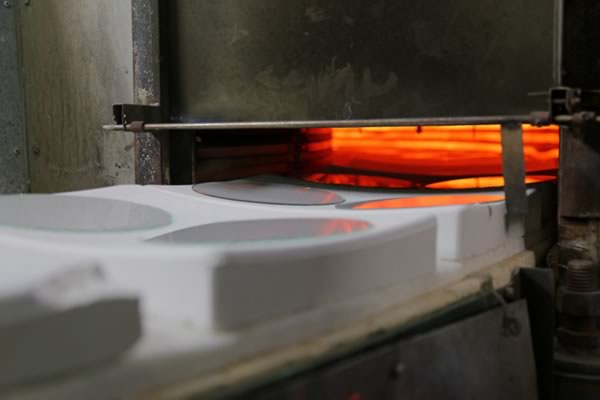
It’s a nightmare scenario: you’ve spent hours on a run, only to find your glass cracking during annealing. It happens because the outside is heating or cooling at a different speed than the inside. That internal tug-of-war creates stress, and eventually, the material just gives up. Most shops just throw standard IR lamps at the problem. But here’s the thing: those lamps often blast energy at wavelengths that the glass simply ignores or bounces right back. You end up searing the surface while the core stays cold. That’s a recipe for a fracture.
Getting the Spectrum Right
The trick is to make the heat actually penetrate the bulk of the material. Every glass mix has its own “fingerprint.” Depending on the additives or dopants you’re using, your glass only wants to absorb energy at specific wavelengths. If your lamp is humming along at 2.0 microns but your glass only “listens” at 3.5, you’re just wasting electricity and overheating the surface. We fix this by shifting the spectral output to match those absorption peaks. When the energy hits the right frequency, it sinks deep into the substrate. The core and the surface heat up together. No thermal shock. No cracks.
The Catch (And How to Handle It)
Of course, there’s a trade-off. To get this kind of precision, we usually have to swap out the filament material or add special coatings to the quartz envelope. Because this makes the heat much more “dense,” you can’t just plug and play. You’ll need to check your conveyor speed and cooling zones. If you pump too much energy into a narrow band without adjusting how fast the glass moves, you’ll overshoot your annealing point and end up right back where you started—creating new stresses.
Why This Actually Matters
When you match the spectrum, you stop fighting the chemistry of the glass and start working with it. It feels different. Your power bills go down because you aren’t wasting energy. Your scrap pile shrinks. And those annoying complex shapes—where the thin edges usually cool way too fast compared to the thick base—finally come out clean. It just works.