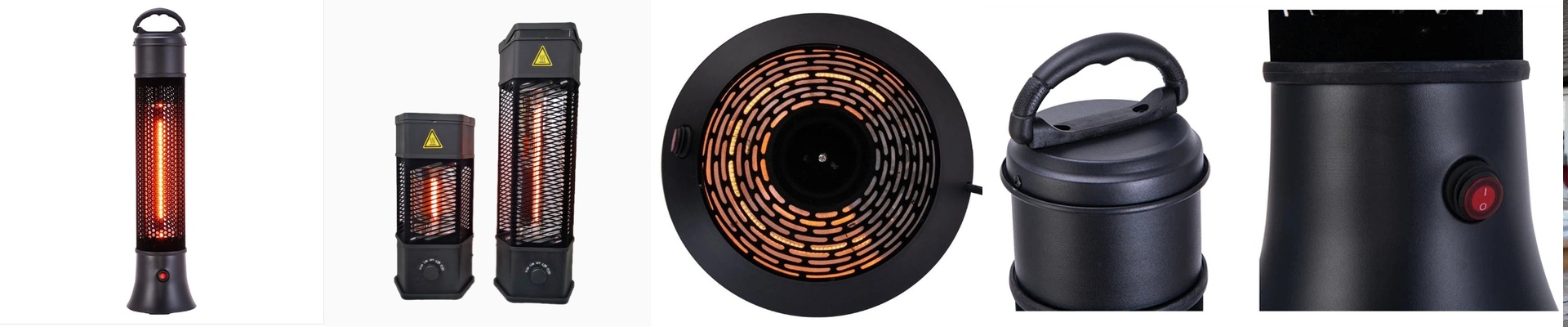
On the line, minutes are money. When the tempering furnace drags or the lamination press stalls, you lose output and pay for it in downtime. Underpowered heaters stretch cycle times, and uneven heat across the glass? That’s how you get thermal stress, bow, and breakage. We built the 1000W quartz infrared bulb to cut through that — fast, controlled heat that keeps pace with the shift. What makes it work, in practice The 1000W quartz infrared bulb puts out short-wave energy with high emissivity, so the energy goes into the glass itself, not the air around it. You get direct, volumetric heating that ramps quickly and cools fast, which shortens soak time and lets you tighten up the thermal profile. The quartz envelope holds steady through repeated thermal shocks, and the compact size drops straight into OEM fixtures or retrofit kits without re-engineering the whole line. Power density is matched to glass processing windows, so you get rapid temperature recovery without hot spots. Why it plays well where it matters In tempering, the bulb brings the surface up to temperature faster, so the heating segment is shorter and the quench can start sooner. In EVA/SGP/PVB lamination, it hits adhesive activation temperature quickly and evenly, which cuts press time and keeps edge overheat in check. The fast response drops kWh per part, and the focused spectrum keeps parasitic losses from convection and furnace walls from eating up heat. For insulating glass sealing, it speeds the desiccant activation phase, helping you maintain a dry cavity without slowing the line. A few shop-floor notes Installation is straightforward, but keep the connections clean and dry, and align the bulb properly to avoid shadowing. It’s rated for a specific voltage and fixture spacing — stray from that, and intensity shifts, which can drive uneven heating. If you’re running variable glass thickness, tweak dwell and power distribution to keep uniformity. Treat it like a matched component, not a universal swap, and you’ll get repeatable heat with fewer interruptions and lower energy draw shift after shift.