
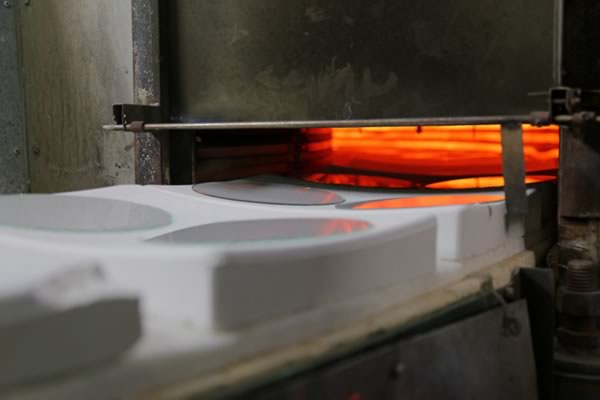
Getting Your Glass Annealing Right (Without the Headache)
If you’ve spent any time annealing spectacle glass, you know the drill. You need the temperature to be exactly right—not too hot, not too cold—or you’ll end up with internal stress or a lens that’s totally warped. For us, the secret isn’t just the heat. It’s where the lamp actually meets the machine.
No More Fighting With Sockets
Let’s be honest: proprietary lamp sockets are a pain. Whether you’re dealing with screw-in heads or some weird, irregular shape that only one company in the world makes, it’s frustrating. That’s why we build our lamps to just work. We’re talking about a true drop-in replacement. You won’t have to spend your afternoon rewiring control cabinets or hacking away at the lamp housing. We match the footprint of what you’re already using so it seats perfectly. Why does that matter? Because if the lamp doesn’t sit flush, you get hot spots. And hot spots mean ruined glass.
Fast Setup, Stable Heat
Nobody likes downtime. We use quartz glass and tungsten filaments to get you up to temp fast. By making sure the lamp fits perfectly right out of the box, we get rid of those clunky custom adapters. Those things usually just get in the way, acting like insulators or messing with your electrical resistance. Instead, you get a direct connection. It keeps your wattage steady. One quick heads-up, though: high-wattage lamps put out a lot of radiant heat. If you’re upgrading to a higher density lamp, just double-check that your housing vents are clear. You don’t want to accidentally fry your socket wiring.
The Trade-off
We’re obsessed with the fit. A lamp that sits tight doesn’t rattle, which means the filament lasts a lot longer. We can customize the interface for pretty much any odd-shaped socket you’ve got. Just keep in mind that custom runs take a bit longer to ship. If you’re in a rush, we keep a huge library of the common industry footprints—like the R7s or Sk15—ready to go and ship immediately.